When Grief Changes Everything: Releasing the Pressure to Be Strong with Leslie Harter-Berg
What happens when the life you thought you were building suddenly disappears?
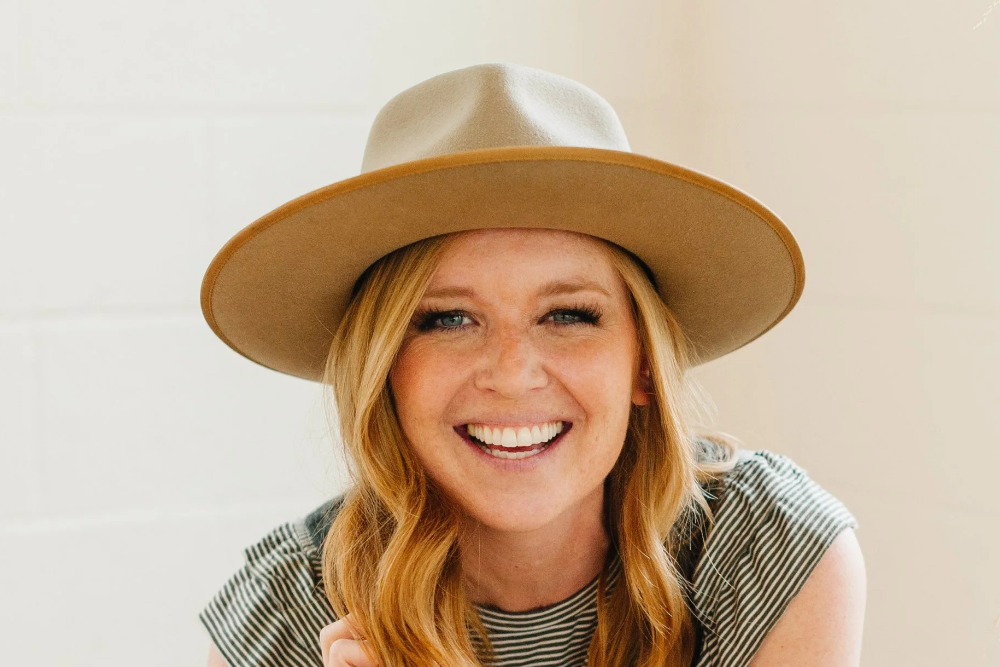
In this deeply honest conversation, Willow sits down with Leslie Harter-Berg, author of You’re So Strong: On Grief and Letting Go of My Favorite Compliment, to talk about the devastating loss of her husband, Ryan, who died suddenly from an aneurysm and stroke at just 34 years old.
Leslie opens up about becoming a widow and single mom overnight, raising two young boys through their own grief, and navigating the complicated identity shifts that followed. She shares how being told “you’re so strong” actually became a weight she felt responsible to carry—and how she eventually learned that she didn’t have to turn her pain into an inspiring story before she was ready.
Together, Willow and Leslie talk about the importance of lament, making room for grief, and resisting the urge to rush toward the “good” ending. Leslie shares how her relationship with God changed as she learned to stop asking what the future should look like and simply sit with Him in the pain of the present.
They also explore parenting through grief, remarriage after loss, making space for a former spouse in a new family, and the beautiful reminder that God is not distant from our suffering. He is a God who understands it.
In This Episode, You’ll Learn:
- Why being told “you’re so strong” became an unexpected weight to carry
- How to let your kids see your grief without making them responsible for your emotions
- Why we don’t have to rush through grief to get to hope or a “better” ending
- What it looks like to sit with God in the pain instead of trying to fix or explain it
- What Leslie now knows to be true about God: He is a God acquainted with our suffering
About Leslie Harter-Berg
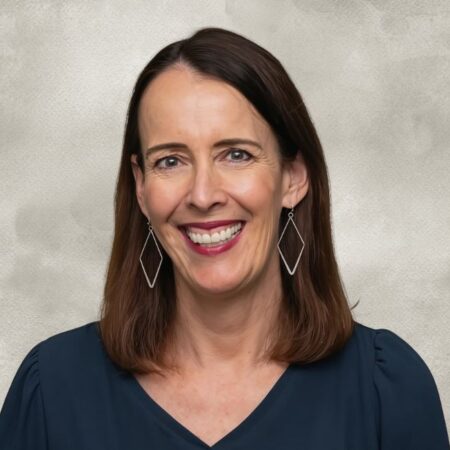
Leslie Harter-Berg is the author of You’re So Strong: On Grief and Letting Go of My Favorite Compliment. After losing her husband, Ryan, suddenly in 2019, Leslie began writing as a way to process her grief. Her story has become an honest invitation for others to make room for grief, weakness, faith, and hope without rushing the process.
Connect with Leslie Harter-Berg
Website | leslieharterberg.com
Instagram | @leslieharterberg
Book | Amazon
Show Notes
Willow Weston
00:00:00.160 – 00:01:24.760
Hey there.
Welcome to the Collide Podcast.
This is Willow Weston.
I’m so glad that you’ve hopped on and I don’t know what you’re up to today, but today I got to interview Leslie Harder Berg.
She’s speaker, writer, owner of a video production company, founder of a non profit, and she.
She creates grief content aimed at helping widows feel less alone.
She’s coming out with a book called you’d’re so strong.
It’s a book on grief and letting go of her favorite compliment.
And she’s hilarious.
She shares honestly, profoundly, and she’s pretty real about the sorrow, about the complexity of grief and encouraging as well.
And I think you’ll enjoy this.
If you’re someone who has experienced grief, is experiencing grief, or has friends that are, I encourage you to take a listen to this episode.
Leslie, it is so great to have you on the podcast today.
I have so many things that I want to ask you, but first of all, you’re coming out of the gate with a book and tell us the name of this book.
Leslie Harter-Berg
00:01:25.400 – 00:01:32.360
The name of the book is you’re so strong on grief and letting go of my favorite compliment.
Willow Weston
00:01:33.550 – 00:01:46.830
I have so much I want to ask you about it, but the first thing is, is I feel like this is a book that nobody ever thinks when they’re a little girl.
I want to.
I want to be able to write a book on grief.
So talk to us about it.
Leslie Harter-Berg
00:01:46.830 – 00:01:47.710
Very true.
Willow Weston
00:01:48.669 – 00:01:49.230
Yes.
Leslie Harter-Berg
00:01:49.310 – 00:03:06.980
So I definitely, from a very young age, was like Jo March.
I was going to be a writer.
And similar to her, you know, I was thinking more fantasy writer.
You know, that was for the genre that I imagined my going for.
But it’s just so interesting that this is where I landed.
My husband dies suddenly, and it’s not like I was like, I gotta write a book about this.
It was more that writing became something that I just felt like I had to do for me.
So I was just doing a lot of writing to kind of get through it and cope and all of that.
And just some.
An agent latched on to some of the stuff I was just sharing and said, would you ever think about putting this into a book?
And that was surreal for me because I always wanted to write a book, but I never thought that this would be the first book that I write.
I don’t love that it’s the first book that I wrote, but I do love what I wrote and I love, I loved the process of it, and it was hard and beautiful and it was just very surreal.
Willow Weston
00:03:08.500 – 00:03:45.819
I mean, I resonate with that so much, just on a personal level, coming out with a book this year as well, and it’s like, oh, man, Lord, you didn’t have me, you know, write a book on, like, fulfilling your bucket list, you know, or like, parks, you can take your kids to pain and healing.
So I totally get it now.
You.
You just kind of mentioned that your husband passed away, but I don’t want to skip over that.
Like, can you invite us back to that, to that season of your life, to this unexpected pain that became a chapter in your story that you never wanted?
Leslie Harter-Berg
00:03:46.620 – 00:06:13.060
Yeah, I know.
It’s.
It’s so easy to just drop that as a widow.
And people are like, whoa, whoa, rewind.
What happened?
Your husband’s dead, so I’m going to rewind there.
So Ryan and I, my husband Ryan, we were connected in everything that we did.
We.
We ran a business together.
We were also the kids, church pastors.
At our church together, there was very little that we did apart.
And we were really best friends.
We met at work.
We were coworkers.
We were two goofballs.
It was like Ryan and Leslie, Leslie and Ryan.
We were one unit.
And we had two boys, Whit and Rory.
They were three and one.
And we took them with my sister and her family and her gaggle of kids.
We took.
We went on a big, epic Disneyland vacation.
We did three days.
We stayed at the park, the works.
And then after that, we were going to Palm Springs to just finally unwind and have the vacation.
After the vacation.
And it was by the pool that Ryan said, leslie, something’s wrong.
And those words changed the rest of my life.
He ended up having a sudden aneurysm and stroke, which was caused by something that was in his brain that he was most likely born with called an AVM that we didn’t know was there.
And so this perfectly healthy 34 year olds was there, and then he was gone.
And I flew back from California with my two boys as a single mom and a widow.
And basically this huge cosmic identity shift because I.
We were Ryan and Leslie.
And then now I was just.
And Leslie, I was like.
At the time, I just referred to myself as a half person because it felt like half of me was gone.
Right?
Like the two shall become one in the Bible.
And I.
We really did do that.
And so that.
It was a lot.
It was a sudden death.
So a lot of that first year was just like trying to figure out what even happened.
And it was hard to even sink in that this was my new life.
So that was in 2019.
So seven, almost seven years ago now.
Willow Weston
00:06:14.260 – 00:06:44.960
So you obviously, I mean, I’m sure it’s so complex and there were so many feelings, but this happened suddenly.
Here you are, you’re there to experience joy and rest and fun and it happens and you’re, you’re with your kids.
So you’re not only having to face this news like, and sort through all of what it means, but you’re having to do that for your children as well.
How did you space for your own grief and theirs?
Leslie Harter-Berg
00:06:46.560 – 00:09:58.420
It was so complicated.
Willow.
I, you know, they, they weren’t just kids, they were little kids.
So a 14 month old doesn’t care really.
It’s really fascinating, right?
Like they just want to, they want mama, they want a nurse, they need to take a nap, their butt still needs to be wiped.
And there’s a lot of practical needs pulling on you when you’re trying to grieve.
And then I had a three and a half year old who was very much talking, had a full relationship with his dad, but was having a really hard time.
A lot like me making sense of what happened and the fact that he wasn’t, he was not going to see Ryan anymore.
Um, so it was interesting.
I felt like I had a hard time understanding their grief.
And what was funny is that I was almost like annoyed that they were more visibly sad and upset.
But I learned, you know, child grief is fascinating, that kids, they really, they really give you whiplash.
So they might be in a moment very upset or they might be upset about something else, but it’s really about the sad thing that happened.
And then all of a sudden they’re asking for ice cream.
So I was, I was trying to understand, you know, like when to go deep and dive in with them because I was obviously kind of 100% of the time sad.
But sometimes kids don’t want to sit around and be sad.
You know, they still want to have fun, they still want to play at the park.
So it was really interesting navigating that as a mom and our, my grief and my kids grief looked so different at the time and it was hard to not to not be just very confused.
I felt like I was like treading water trying to figure it out.
And I, I had resources in the Portland area.
There’s the Dougie Center.
I actually think they have a few places around the nation.
But that was hugely helpful in learning how to, learning what’s going on in kids minds when it comes to grief and how to talk with them about their dad and how to navigate that big loss while still making time for my grief.
But yeah, I don’t think I did it perfect.
And honestly, it grief doesn’t leave you.
So now my kids, Whit and Rory, are 10 and 8 now, which is just so.
And even last night My son, my 8 year old, couldn’t go to sleep because he was crying about Ryan.
And he’s the one that was a baby and really doesn’t have any memories of him and he still misses him so deeply and misses what he lost.
So it’s not, it’s not like, oh, we’re, we’ve moved on, we’re good.
It’s still very much a pain that continues.
And especially with kids, with each developmental stage, it shows up in new ways.
Willow Weston
00:09:59.860 – 00:10:18.380
Absolutely.
I mean, there’s just new things to grieve that you realize are losses in your life that you’re never going to have that you wish you did or that you were intended to.
So it makes so much sense.
Did you ever feel like you were coming undone and felt a mess and you had to hide it from your kids?
Leslie Harter-Berg
00:10:19.980 – 00:11:21.750
Absolutely.
I, you know, the book is called you’d’re so Strong because my personality type really felt like this is what the world needs me to be.
A lot of people were telling me, you’re so strong.
And I was looking sort of for a recipe for what was expected of me and how to do this.
And so I was putting on a strong face for everyone.
But I think probably the most for my kids.
I think I probably closed the door to cry a little too much at the beginning.
I was a little bit more loose at the beginning.
But then as days went by, I was like, they, they seem to be doing great and I’m gonna be bringing down the party if I am weeping all the time.
So I, I feel like I didn’t bring them into my mess, but I wish that I had a little bit more so that they felt like it was okay to fall apart too.
Willow Weston
00:11:23.270 – 00:12:38.180
It feels like there’s a fine line.
I mean, I certainly am.
I don’t have your experience.
I can’t say that I, I do.
But I definitely spent a lot of time in my kids childhood having to grieve my own childhood wounds and pain.
And I think I had to figure out that balance of where are safe spaces and healthy spaces where when I’m coming undone about something or needing to process, I’m doing that outside of my children.
But then also, what are sort of like the little pockets of things where I should be being real and Inviting my kids into what is true and what is real and what is me and what is my story.
And it’s always hard to know how much mess do you let them into and how much do you keep from them?
Right.
I think that’s a hard thing.
And so a lot of moms go, I’m not going to let my kids into anything.
And so kids feel like they can’t cry or they can’t be mad or they can’t question God, because a lot of.
Of us feel like we have to hide everything.
Right.
And then there’s the opposite, where there’s some of us who just come undone all the time.
And so then our kids feel like they’re our therapists and there’s got to be some sort of, like, middle ground there.
Leslie Harter-Berg
00:12:38.900 – 00:14:13.640
Yes.
I remember learning that, you know, what often happens with kids when they see their parents going through something truly awful and catastrophic is that they.
They will, like, minimize their own pain.
They’ll become the caretaker.
And I think I learned that early on.
And so I was aware of that.
So I really did.
You know, I probably maybe went too strong in some areas and maybe too vulnerable in others.
But also I’m pretty easy on myself.
Looking back, like, it was just a mess of a time, and God’s grace really covered us and walked us through.
Through that.
But I feel like, with wit, I wanted him to be able to cry about Ryan, but every time that I wanted to go there, he didn’t necessarily want to go there.
And so I learned that I.
It wasn’t always helpful for when I was breaking down to bring him in on it, because he would just become caretaker.
Right.
Like, let’s make mom happy.
Let’s get out of this.
How can I be a good boy and make this easy?
But I tried really hard when I noticed he was going there and he was getting emotional to pause what I was doing and get on the same level with him and try to get into that.
That feeling with him, to show him that, you know, like, I’m here with you in this.
Like, you’re not alone in this pain.
This does it.
This isn’t the way that it was supposed to be.
This is.
Willow Weston
00:14:13.640 – 00:14:28.160
Talk to us about this whole compliment that people gave you.
You’re so strong.
What kind of weight did that put on you?
And how did you live out of that weight to sort of fulfill other people’s expectations of you?
Leslie Harter-Berg
00:14:29.520 – 00:16:42.830
You know, I was shocked at how much I got it by people that really, before I had even done anything that was.
That is what’s so funny about that compliment to me is that I think I was out at a coffee shop just, like, a couple weeks after Rya, and someone came up to me and said, you are the strongest person I know.
And I was like, do you know me?
But what’s interesting about my particular personality type is that I really did.
I latched onto that, and I was like, okay.
I wasn’t super offended by it.
I was just more like, you’re looking at me seeing some future version of yourself, and you want to know that you could make it too.
I think I almost put a lot of pressure on myself.
Like, I need to spin what happened.
I need to inspire the world, you know, in a lot of, like, Christian messages.
It’s like, I need to turn my mess into my message.
And I think I went a little too fast after that because I. I was, like, trying to almost climb out of the stages of grief.
I was trying to find the formula.
And to me, and then the ending of that is really.
And you will all be inspired.
And that’s how I will be strong.
And what I learned was that’s pretty fruitless, because it’s not that God designed this death thing so that we could all become these strong, inspiring people.
Right?
God redeems the bad.
That’s happening, yes.
But that doesn’t mean the bad’s worth it.
That doesn’t mean that he caused the bad, you know?
So I think that I learned that actually it’s okay to sit in the terrible and to acknowledge that, oh, God thinks this is terrible too, that God is angry at death too.
And I feel like that that took a while to learn, but really, you know, the beginning was trying to prove that I was so strong by, I don’t know, being some sort of shiny example.
I don’t know if people really needed that from me, but I put it on myself.
Willow Weston
00:16:44.350 – 00:17:14.220
Well, I think there’s something like we fight to find purpose or meaning in the midst of hard, right?
And I think ultimately we.
We will get there.
But sometimes, like you say, we fast forward our own brokenness to get to wholeness, and it’s not real.
Right.
And so I’m curious if.
If you think about people listening who might be right there in the middle of the messiest chapter, and they feel like, this pressure or this weight to be strong for everyone else.
What would be your advice for them?
Leslie Harter-Berg
00:17:15.900 – 00:18:15.560
My advice would be to take a nap, to go easy on yourself, to.
To make your to do list a little smaller, a little more practical, to lean on the Community that’s around you.
You know, we do come to a point where we start protecting those around us from our story and our pain too, because we feel like it’s too much for them to carry.
And I feel like the more that you allow maybe someone to take your kids for the day so that you can stay in bed.
You know, that’s a fine line because you don’t want to stay in bed forever.
But I think at the beginning, in the real beginning of your mess and you’re horrible and you’re awful, it’s okay to sit in that.
And I do feel like when you are in that, when you’re truly lamenting, that you do feel the Holy Spirit lamenting with you.
Willow Weston
00:18:17.480 – 00:19:13.840
I was gonna ask you, where did this land you with God?
I mean, you, I think as women and probably men too, but we get married and we do become one and we build a life around each other.
My husband and I were just talking about this.
We’ve been married 27 years and I’m like, it’s crazy that God invites us to become one, but then there will be a day where we won’t, will be like one of us will be gone because most likely we’re not going to die at the same time.
And I’m like, that’s so crushing to like build a life around someone else.
Like where you become one.
You build a family, you have a house, you share dreams, you, you pray, you work, you do things and you’re there for each other.
You know each other’s most intimate secrets, like you’re each other’s cheerleader.
All the thing, all the things.
And then all of a sudden it taken from you.
How did you come out?
Still liking God?
Leslie Harter-Berg
00:19:16.320 – 00:22:58.460
Yeah.
I mean, the whole concept of marriage is so beautiful.
And when it is ripped away, those are some of the big existential questions.
Like what is the point of this if it, it feels so permanent when you’re in it?
Because it is just so soul tying.
But when you lose it, you don’t have regrets about all of that.
So, you know, as painful as it is to deeply connect with somebody, it’s so worth it.
And you almost, the pain just connects you to them even more.
And the love.
I did not.
I don’t feel like I was asking why God?
Or how could you and I. I didn’t really have big questions, like it didn’t alter my faith.
But the weird thing about widowhood specifically is that you don’t realize how much marriage is tied to your future.
And the idea of like you are, you’re one, you’re, you’re dreaming.
And everything that you just, you don’t talk about it, but it’s just there, the unspoken future that you’re like, this is going to happen.
We’re going to have more kids, we’re going to build our business, we’re going to build this life together.
We’re going to do ministry together, we’re going to help people together.
Like, that’s all snuffed out.
And what I realized after Ryan died was how much my prayer life, my Bible reading, my studying was connected to future.
Like when I read the Bible or prayed, it was like, what do I need to do now to become better in the future or to be more connected to God or to do God’s will.
But when you become widowed, you do not want to think about your future.
That’s actually the most painful part.
So I actually had a very hard time coming to God.
Not because I didn’t believe he was there or that he cared, but because it was deeply painful to sit in to, to read the Bible and feel like, oh, I need to try to grow my faith right now.
I, I don’t want to change.
I, I want to be like stuck here.
I don’t want to go forward without Ryan.
So that took me a while and I think that was like the, the most pain in my faith.
And it took me a while to be okay with there being a future, to have hopes and dreams about.
And once I was there, it was easier to re enter.
But I think it, it, what I learned during that time was that my relationship with God didn’t have to be this future, like heavy moment.
It was actually just sitting in the pain with him and feeling his presence more in that, that was, that was something that I learned along the way, was more important for my walk at the time.
I think it’s beautiful to dream for the future with God and to have vision, but something with widowhood and maybe grief too, because I imagine losing a child also makes you not want to think about the future, you know?
So, yeah, that, that was something that I learned was to be.
To just sit with God in the pain and that that dreaming and that hope came later.
Willow Weston
00:23:03.020 – 00:23:44.920
Hey there.
I want to tell you about my new book, Collide Running into Healing.
When life hands you hurt and life does hand us hurt.
And if we don’t get healing for that hurt, our pain starts to come out sideways.
And that’s what we see when we’re having sleepless nights and anx and insecurity Walking into parties and friendship breakups and all of these things.
And so I want to invite you to say yes to God’s healing in your life so that you can not only live the life you are made to live, but you can bring healing to other people who are hurt.
So grab a copy of my new book anywhere you buy books.
Amazon, Barnes and Noble, wherever.
Let’s collide.
Leslie Harter-Berg
00:23:49.530 – 00:23:50.290
And that’s okay.
Willow Weston
00:23:50.290 – 00:24:19.200
That’s really a.
A really interesting experience that you just invited us into.
I don’t know that I’ve ever thought about just even how we approach scripture and God as mostly futuristic.
And what does it look like to be despairing and weak and need him only for the present, not even wanting anything for the future.
That’s a.
That’s a really interesting idea how to do.
Experience him showing up in your presence in.
In that space.
Leslie Harter-Berg
00:24:21.440 – 00:26:02.400
You know, I.
When I would go to try to pray in 2019, when he died, I would almost.
I would just crumble and cry.
And I really felt.
At first, I felt alone.
And as.
As I kept going back and bringing kind of that pain and being okay with that time with God not looking a certain way, I think I just started to feel almost like, we’re in this together sort of pain.
And I felt just, you know, sort of those verses called to mind of like, in this world, you will have trouble.
I felt comfort in the guarantee of bad things happening.
I also felt comfort that death is not something that I had to just spin or get out of or get to the good part.
I learned that with my kids, too, because I always wanted to get to heaven and be like, but he’s in heaven, and we’re gonna see him one day in heaven.
Because I wanted to make them feel better in that moment, but what they really needed in that moment was, I’m so sorry he’s not here.
And he’s not gonna be here.
He’s not gonna be at your soccer game.
And I’m so sorry.
I.
You know, as a parent, you really want to make things all better.
And I found that in my own life, I was doing that, too, in my own faith.
Like, get.
Trying to get to the ending, but I think there’s a moment to just grieve and lament the fact that this world is broken and this is not what God designed for our family.
Willow Weston
00:26:04.480 – 00:26:24.620
I would imagine being a mom, I’ve had this experience with my own kids where in midst of my grief, my kids would say something to me that would just be so profound about God in life.
And I’M curious if you’ve had any moments like that with your kiddos.
Leslie Harter-Berg
00:26:25.580 – 00:28:21.450
My little, my one that was a baby Rory, he always drops the most profound questions about heaven and the new earth.
And like, I always am shocked.
The sort of questions that he throws at me and I’m like, like, we gotta get NT right on the phone here because I don’t know if I have the great answer for any of that.
But a lot, a lot of the questions and the little thoughts and the little funny things that they said have to do with what is Ryan doing right now?
You know, Whit one time was like, I bet he’s climbing trees like that tree, you know.
Or do you think dad’s playing video games or a lot of it is, is wrestling with what’s going on right now, which is intense to answer because that’s your deepest, darkest, like questioning, like, where is he right now?
What’s happening right now?
Right.
That’s the big existential question.
And I, I think the answer is, is pretty tricky even with the Bible to give what they’re, what he’s doing right now.
And so I feel like I’ve flubbed my way through that.
But I also think it’s, it’s, it’s so beautiful to, to imagine heaven as being not that different from Earth.
So what I like about their questions is like, video games is something that they know on earth and something they can imagine.
And I think that’s beautiful to be like, you know, it’s God created this beautiful place and so this new place is not going to be that different.
And N.T.
Wright does have a podcast where he has little kids ask him questions about heaven.
And so it’s really fun to hear how he kind of explains those things.
But I found myself On a daily NT Wright podcast with my 8 year olds.
Willow Weston
00:28:21.450 – 00:28:58.530
Really big questions, big questions.
You talk about this entire shift in your identity that had to happen, right?
Where you go from being married to being a widow parenting with a partner to single parenting and being married to even now facing singleness and dating again.
Can you talk to us a little bit about how hard that shift was and some things you learned in the midst of it.
Leslie Harter-Berg
00:28:58.850 – 00:29:08.430
Yeah.
And what’s.
I’m actually not single now.
I’m married again to spoil the end of the book.
But oh, spoiler alert even more.
Willow Weston
00:29:08.670 – 00:29:13.230
I saw your ring and I was like, oh, does she have, she still has her ring on.
Leslie Harter-Berg
00:29:13.630 – 00:32:24.040
I have another husband.
So that’s a whole other crazy topsy turvy.
I have another identity shift.
But yeah, it was a lot.
You don’t realize how much you wear your.
These parts about you so deeply.
I always compare it to my hair.
I had like, very, very curly hair.
And then when I got pregnant the first time, my curls went away and now they’re like starting to come back because I’m done nursing.
But it was interesting.
I went five years without having curls and I was like, who am I?
You don’t realize how attached these identities become to who you are.
And I really was attached to being Ryan’s wife, which I don’t think is bad, but I do think that, that before I was ever Ryan’s wife, right.
I was chosen by God.
I was a daughter.
And so I do think that there was some needing to get rerouted.
Re.
Like grounded in who I actually am outside of Ryan.
And being a single mom is very lonely.
It’s.
You don’t realize.
Okay, and this is funny because in some ways it’s easy because you don’t have to make decisions on everything together, right?
You want to buy the snacks with the red dye and you don’t have to bring anyone in on it.
You want to go over the budget.
You’re.
You want to do this extracurricular activity.
There’s like no meeting.
So in some way your life has gotten simpler.
But at the end of the day, when you are worrying about their future and you are wondering about shaping their character, when you’re wrestling with the big stuff, it’s so lonely to do that alone.
And being single again was bizarre because I was, I was dating while I was doing preschool drop offs.
You know, it was very strange and trying to navigate how to date without bringing in the kids.
But then, okay, this person needs to know the kids because this is kind of like a three for one package.
They need to be involved in the process.
They need to.
They need to.
So it was a balance to know when to bring in my current husband when we were dating.
And then getting married again is this whole reestablishing, letting someone else in on the decisions that I had gotten so used to making on my own.
And it was like, whoa, these are.
I make the decisions here.
But then I had to invite someone else in.
And again, kind of of you late, you, you lay down a lot of who you are when you’re married to kind of come to these compromises.
And I believe it’s really sanctifying in the end.
But it’s, it’s interesting.
It’s definitely been like a lot of back and forth in just the last seven Years and a lot of identity shifts.
So I think by now I feel like I’m a pro at just shifting these identities.
Willow Weston
00:32:25.570 – 00:32:30.930
Wait, I have to ask you, did he have children as well and was previously married or.
Leslie Harter-Berg
00:32:30.930 – 00:33:21.660
He was previously married.
That was one thing.
I was like, I would love to marry a widow, a widower, or a divorcee, because I couldn’t imagine entering a second marriage and then having to kind of go through all that first.
Those first marriage lessons that you’re just so shocked by when you first get married.
And so I did want to marry somebody else, and I.
That had a marriage story.
So he was divorced, but he did not have any kids.
So he got thrust into parenting on chapter.
Let’s see.
Rory was 4 and Whit was 6 when we got married, and now we actually have a third boy together.
Oh, wow.
So we are a blended family.
Three boys.
Willow Weston
00:33:23.020 – 00:34:01.500
I love it.
That’s.
Yeah, that’s awesome.
I’m happy for you.
I have to ask you because I’m so curious.
How do you.
How do you deal or navigate with being real about your grief still when it comes to Ryan with your new husband?
Because I would imagine that has to be kind of like.
I don’t know.
I don’t even think awkward’s the right word.
But, like, you could be sad or miss someone, but still love.
Have your husband that you’re with now, and is it okay to talk about that versus, do you have to hold all that in and only share it in another space so you don’t make your current husband feel bad?
How do you navigate that?
Leslie Harter-Berg
00:34:01.500 – 00:34:04.980
I know, I know.
I’m about to.
I’m doing a book tour on this.
Willow Weston
00:34:05.140 – 00:34:07.220
Are you about to pull your curls out right now?
Leslie Harter-Berg
00:34:08.340 – 00:38:29.580
Yeah, I’m gonna pull these out again.
Then I’m gonna lose my identity on my curls.
No.
So my husband, very gracious man, the one that I am married to now, I think when Ryan dies, I was convinced I believed in.
You’re sad.
This sadness will never leave.
And I do think that is true.
That grief doesn’t just leave.
It’s gonna come back.
It’s not gonna be like that first year where it’s all you can think about.
And I remember someone saying, you will.
There will be a day in the future that goes by that you won’t think about Ryan.
And I was like, absolutely not.
I wanted to have that pain forever.
I wanted to hold that grief forever as, you know, part of who I was.
But there does come a day where that happens, and the grief comes more randomly and Unexpectedly.
But I had this romantic notion that, almost like polygamy, that I would just always be married to Ryan, you know, in spirit, and then also be married to someone else.
Else.
And I think it’s a beautiful thought.
I’ve heard other widows talk like that.
But it does break down in real life when you actually have a real person that.
That’s alive that you care about.
You have to be sensitive about how you talk about the other relationship.
So when it comes to grief, I really don’t.
I don’t, like, hide it from Solomon.
My husband.
Now, he is very caring, and he is there to hold me when I cry.
And it’s been really beautiful to see that.
But I’m not always, you know, there’s certain.
I’m not going to be bringing up my romantic relationship with Ryan.
With him.
I don’t think I. I shouldn’t talk about that at all.
I think there’s a place with girlfriends and stuff to talk about that.
But.
But I have to be sensitive about how that would make him feel.
So it was interesting.
Once you’re in a real.
There’s like a real person that each story affects.
It did change once I was in a marriage.
I’m like, how am I going to navigate this now?
He’s been the biggest supporter of this book, but he’s also.
In the book, you know, it’s a story about losing Ryan, and it’s also a story about finding love again and navigating how complicated it is to build a family.
You know, there’s a chapter in the book called Gallery Walls Suck, because we were putting together a gallery wall when we first got married.
And I was so panicked that we had so many more pictures of the new family and not as many of the old family.
And it was like this.
This game of trying to make sure Ryan was equally represented.
And I feel like that was just not worth the effort because in the end, it is sad we are going to have pictures that outnumber our pictures with Ryan.
We were only married five and a half years, and, you know, Saul and I were very newly married, but we hope that we get more than that.
And so that means that they’ll be more pictures with the Saul family.
And so I’ve.
That was really hard at the beginning to accept, but I think I’ve come to the point where it’s just another, you know, showing of the brokenness of this world, that Ryan didn’t get to be there for the graduation pictures and the future grandbaby pictures and all of that.
But I still want him always to be on the wall.
I still want him to always be in the stories of our family, because we wouldn’t be here if he.
If the whole story hadn’t happened.
And my boys are just little walking clones of him.
As the years go by, they’re just turning into him.
And so they very much need to know who they are and where they are from, and they need to know who their dad is.
So he is part of our family story.
Absolutely.
But there’s a delicate balance of how often I am bringing him up with Saul.
Willow Weston
00:38:31.820 – 00:38:33.820
So, so complex, right?
Leslie Harter-Berg
00:38:34.700 – 00:38:41.140
So complex.
I know after I finished that I was like, does that make sense?
The gallery.
Okay.
Willow Weston
00:38:41.140 – 00:39:03.680
It makes so much sense.
When you think back to Palm Springs and your life turning completely upside down, and then you think about all that God has done in your life and through your life since then, what would you say is, like, the biggest thing you now, like, cling to and know to be true about God?
Leslie Harter-Berg
00:39:05.920 – 00:39:40.170
I know that he is a God that is acquainted with our suffering, that.
That we can be weak because he is strong.
And he’s.
He’s a God that understands.
I feel like that’s the biggest takeaway is that in my pain, there was a closeness to him because he connected with the pain.
My pain was his pain.
And I think that that’s probably my answer for that.
Willow Weston
00:39:42.200 – 00:40:00.440
Leslie, I know that there are people who are going to want to hear more about your story, more about your gallery wall.
That sucks.
More about all that the Lord has done in your life and grab wisdom for their life.
How can they.
How can they follow up with you after this podcast?
Leslie Harter-Berg
00:40:00.920 – 00:40:18.870
Yes, you can find me on Instagram at Leslie Harter-Berg.
And then also you can order my book pretty much wherever books are sold.
It is on Amazon, but it’s also at other bookstores.
So give it a Google.
You’re So Strong.
Willow Weston
00:40:20.470 – 00:41:06.370
Love it.
Thank you so much for being on today, Leslie.
Friend.
I hope this conversation with Leslie somehow brought you encouragement or comfort or hope.
And if it did, I encourage you just to simply share it.
It.
Who do you know that’s walking in a valley right now who’s experiencing grief?
The complexities of grief, the pain and the mess.
Who feel like they have to be strong.
You sharing this is simply you helping them.
You ministering to them.
That simple act can truly bring help and hope to someone who needs it today.
So I hope that you’ll do that.
Keep colliding this week, and we’ll catch you next week.